
Automation vs. Hiring: Which Actually Solves Operational Bottlenecks?
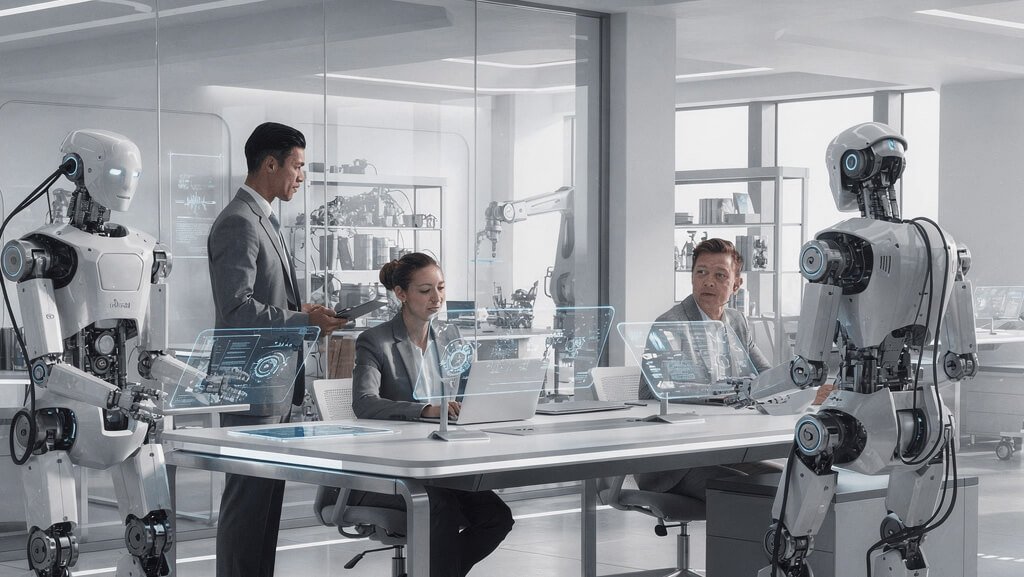

As businesses grow, leaders eventually run into the same frustrating wall: the team is overloaded, processes slow down, communication breaks, and everyone insists the only solution is to “just hire more people.”
But adding headcount rarely fixes the underlying operational issues. It often makes them worse.
Automation offers a fundamentally different path—one that scales more predictably, costs less over time, and eliminates the very bottlenecks that new hires struggle with.
This article breaks down how to decide between hiring and automation, and why the highest-performing companies use automation first.
1. The Traditional Answer to Growth: Hire, Hire, Hire
For decades, the business playbook looked like this:
- more customers → hire
- more orders → hire
- more support tickets → hire
- more marketing activity → hire
That model worked when operations were simpler.
Today’s businesses rely on complex tech stacks, multi-channel workflows, and customer expectations that require speed and accuracy. Throwing people at problems no longer scales.
Hiring solves capacity.
Automation solves the system.
2. The Real Reason Teams Feel Overwhelmed
Teams don’t get overwhelmed because they lack talent. They get overwhelmed because they’re drowning in:
- repetitive admin work
- manual data entry
- inconsistent processes
- constant status checks
- avoidable human errors
These are system problems, not staffing problems.
Automation removes the work causing the overwhelm. Hiring simply shifts it around.
3. What Hiring Actually Fixes (and What It Doesn’t)
Hiring does help when:
- you need creative, strategic, or specialized skills
- leadership capacity must expand
- a role requires human judgment or communication
Hiring does not fix:
- slow workflows
- inconsistent execution
- broken data flows
- tasks constantly falling through the cracks
- tools that don’t integrate
Those problems require automation, not people.
4. Why Automation Outperforms Hiring for Operational Scale
4.1 Automation handles repetitive work instantly
Tasks that take a human 5–20 minutes happen in seconds.
4.2 Automation eliminates errors
Human error rates average 2–5%. Automated workflows stay near zero.
4.3 Automation is cost-stable
Employees require payroll, benefits, onboarding, and management.
Automation requires none of those.
4.4 Automation scales infinitely
Hiring scales linearly.
Automation scales exponentially.
4.5 Automation improves employee morale
Your team gets to focus on impactful work, not busywork.
5. Cost Comparison: Automation vs. Hiring
A typical full-time operations employee (fully loaded) costs:
- $4,000–$7,500/month
A well-built automation system costs:
- $1,500–$5,000 one-time implementation
- minimal ongoing maintenance
Automations don’t:
- take sick days
- get overwhelmed
- forget steps
- need training
They just run.
6. The Hybrid Model: The Real Future of Operations
Smart companies don’t choose between humans or automation.
They combine them.
The ideal operational structure:
- automation handles repetitive, rules-based, and error-prone work
- humans handle strategy, creativity, leadership, and nuanced decisions
This structure gives businesses the operational leverage they need to grow without operational chaos.
7. When Hiring Makes Sense Before Automation
While automation usually comes first, hiring does take priority when:
- a role requires emotional intelligence
- leadership bandwidth is maxed out
- the business lacks strategic direction
- manual work is minimal but decisions are complex
But these scenarios are exceptions—not the norm.
8. How SmartBuzz AI Helps Leaders Decide
SmartBuzz AI works with CEOs and operations managers to analyze:
- workflow frequency
- error rates
- labor hours
- tool limitations
- cross-department bottlenecks
We identify whether automation, hiring, or a hybrid model solves the problem most effectively.
Most of the time, leaders discover the same truth:
The bottleneck isn’t the people. It’s the system.
9. Final Thought: Automation Creates Space for Humans to Do Their Best Work
Hiring adds capacity.
Automation adds leverage.
Leaders who rely solely on hiring eventually hit a wall of complexity.
Leaders who build automation first create organizations where:
- teams perform at their highest level
- operations become predictable
- scaling feels clean, not chaotic
In the automation era, the businesses that thrive aren’t the ones with the biggest teams—they’re the ones with the smartest systems.
_____________________________________________________________________
Summary
- Automation handles predictable tasks consistently.
- Hiring is best for creative or human-sensitive tasks.
Automation reduces workload and burnout across teams.